Wine shop and wine bar for sale: licenses, cellar, and what drives the price
A wine shop for sale is paid for in three parts: goodwill, equipment, and inventory. Unlike a bar, the third item can weigh more heavily than the others because the cellar ties up capital, and not all bottles are worth their purchase price. The correct price comes from a physical inventory evaluated at documented cost—adjusted for turnover and storage—and from verifying the licenses to sell and serve alcohol.
What a buyer acquires when taking over a wine shop or wine bar
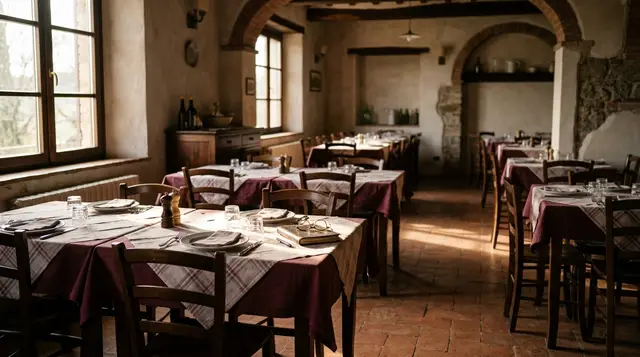
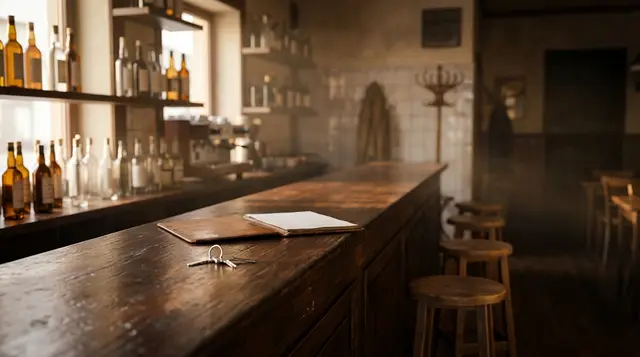
A wine shop is a retail business specialized in wine and other alcoholic beverages, often featuring on-premise tasting. A wine bar is a food and beverage service business: it serves wine by the glass or bottle, usually with food or cold cuts and cheese boards. Many businesses are hybrid models, featuring a retail counter and a few tables.
In all cases, the buyer is acquiring a business, meaning the set of assets organized to carry out the activity (art. 2555 of the Italian Civil Code). Concretely, there are four components:
- Goodwill: the extra value the business has compared to the sum of its assets. It includes clientele, location, reputation, and the ability to generate income.
- Equipment and furnishings: climate-controlled cellars, shelving, counter, dispensing systems, and a kitchen if present.
- Inventory: the bottles and other goods owned by the seller on the date of transfer.
- Licenses and contracts: permits to be transferred, lease agreement, and relationships with suppliers and employees.
In bars, inventory is a marginal item because goods turn over in a few days. In a wine shop, it can be worth as much as goodwill or even more, containing references that sit untouched for years. For this reason, the first mistake to avoid is treating inventory as a minor detail to sort out after signing.
What licenses are needed for a wine shop and a wine bar
The word "license" covers different titles. It is necessary to understand which ones the business for sale holds and which ones the buyer needs.
Retail sale
The wine shop is a commercial business in the food sector, regulated by Legislative Decree 114/1998. It is normally opened or taken over via a SCIA (Certified Notice of Business Commencement) submitted to the Municipality. The manager must meet the professional requirements set by art. 71 of Legislative Decree 59/2010: a qualifying course, a relevant degree, or documented experience. Decree-Law 223/2006 allows small food retail businesses to offer on-premise consumption without assisted service. This is the regulatory basis for wine tastings in a wine shop.
Food and beverage service (Somministrazione)
The wine bar falls under food and beverage service (Law 287/1991). The same professional requirements apply. The title is an authorization or a SCIA, depending on the area and municipal rules. Health registration required by EC Reg. 852/2004 is always necessary. The process is the same as for a bar, described in the complete guide to bar licenses.
Fiscal license for alcohol
The so-called "UTF license" is the fiscal license required by art. 29 of the Consolidated Excise Act (Legislative Decree 504/1995). Today it is managed by the Customs and Monopolies Agency (ADM). Whether it is required depends on the type of activity and the products sold, and the regulation has changed several times. This must be verified with the competent ADM office before signing.
| Aspect | Wine shop (Enoteca) | Wine bar | Hybrid formula |
|---|---|---|---|
| Classification | Retail sale, food sector | Food and beverage service | Both, with distinct titles |
| Reference regulation | Legislative Decree 114/1998 | Law 287/1991 | Both |
| On-premise consumption | Without assisted service | With table service | Depends on the title used |
| Professional requirements | Art. 71 Leg. Decree 59/2010 | Art. 71 Leg. Decree 59/2010 | Art. 71 Leg. Decree 59/2010 |
| Inventory weight | High | Medium | High |
How the cellar inventory is evaluated
A wine shop's inventory is not evaluated lump-sum or at list price. It is assessed bottle by bottle, using a method agreed upon before the inventory count. The minimum procedure is as follows:
- Joint physical inventory. Buyer and seller count together on the agreed date. For each reference, they record the producer, denomination, vintage, format, and quantity.
- Reconciliation with purchase invoices. Each reference is valued at documented cost. A bottle without an invoice has a value to be negotiated, not a given value.
- Separation of goods not owned. Bottles held on consignment or sale-or-return, samples, and distributor gifts do not belong to the seller and are not included in the price.
- Turnover classification. References sold regularly over the past year are distinguished from stagnant ones. The latter are worth less than cost because they need to be liquidated.
- Storage check. For old vintages and large formats, cellar temperature and humidity, wine level, and the condition of the cork and label are checked.
- Application of the conservative principle. The civil code (art. 2426, no. 9) and accounting principle OIC 13 evaluate inventory at the lower of cost and realizable value. The same principle works in negotiations.
- Adjustment rule. Between the inventory and closing, the wine shop continues to sell. The contract must specify how the value is updated as of the actual transfer date.
Why inventory weighs more than goodwill in a wine shop
In a bar, value lies almost entirely in goodwill and equipment. As a reference point, the median price of bars in the Sherlok Observatory is 135.000 €. This is data on bars, not wine shops. The comparison helps understand the price structure, not estimate it, because in a bar, inventory has a minor impact.
In a wine shop, three opposing factors apply.
The first is immobilized capital. A large cellar requires advance purchases, sometimes of vintages that will be sold years later. The buyer is paying for goods that will turn into cash over time.
The second is the tie between goodwill and the owner. A wine shop's clientele often follows the expertise of the person giving recommendations. If the owner leaves, part of the goodwill may leave with them. The non-compete clause (art. 2557 of the Italian Civil Code, normally five years) only partially protects against this.
The third is the risk of double counting. If the turnover of recent years includes the liquidation of stagnant stock, the income justifying the goodwill is inflated by goods that will not repeat. It should be paid for only once: either as inventory or as goodwill.
The list price is a retail selling price and includes the margin. Paying for inventory at list price means giving up the profit that the buyer should make.
How inventory is written into the transfer contract
Business transfers are executed through a public deed or authenticated private agreement. They must be filed with the Business Register (art. 2556 of the Italian Civil Code). In the contract, it is advisable to indicate three distinct considerations: goodwill, equipment, and inventory. For inventory, a provisional price and a mechanism for adjusting it based on the final inventory are established.
From a tax perspective, a business transfer is outside the scope of VAT (art. 2, paragraph 3, lett. b, DPR 633/1972). It is subject to proportional registration tax (DPR 131/1986), with rates varying by asset type. For goodwill and movable property, the standard rate is 3%. If inventory is sold separately, before or after the transfer, it follows the ordinary rules of goods sales, with an invoice and VAT. The scheme must be decided with a notary and accountant before signing.
Other clauses to include:
- Supplier contracts. Pursuant to art. 2558 of the Italian Civil Code, the buyer steps into non-personal contracts. Territorial exclusives and allocations of highly sought-after cellars often depend on personal relationships and must be confirmed with the supplier.
- Debts. Pursuant to art. 2560 of the Italian Civil Code, the buyer is liable for debts resulting from mandatory accounting books. A seller's guarantee regarding unpaid supplies is prudent.
- Employees. With the transfer, employment relationships continue with the buyer (art. 2112 of the Italian Civil Code).
What checks to perform before signing
In addition to inventory, there are four verifications that anyone taking over a wine shop or wine bar should not skip.
Permits and licenses. It is necessary to verify that the SCIA or authorization is registered to the business and that the declared surface area matches the actual one. Any municipal regulations on operating hours and outdoor seating (dehors) must also be checked. The transfer of titles to the new manager is explained in the guide on takeovers and license transfers.
Premises. With a business transfer, the lease agreement can pass to the buyer even without the landlord's consent (art. 36, Law 392/1978). However, formal notice must be given, and the landlord can object for serious reasons. Remaining lease duration and a permitted use compatible with food and beverage service are also crucial if opening a wine bar.
Business data. The Sherlok Dossier collects official data on any VAT number, along with the integrated cadastral map. It has two limitations to keep in mind: the cadastre does not cover the provinces of Trento and Bolzano, where the land book system applies, and many wine shops are sole proprietorships or partnerships, which do not file financial statements. "Not filed" does not mean "not declared": in such cases, tax returns and VAT registers provided by the seller are required.
Receipts. Electronic daily receipts from recent years must be compared with declared turnover and merchandise purchases.
How a wine shop owner prepares for a sale
A seller can avoid most difficult negotiations by preparing four things before publishing the listing.
- An updated inventory, with purchase cost and date of last sale for each reference. This is the first document the buyer will request.
- Liquidation of stagnant stock. Bottles that do not turn over lower the average inventory price and prolong negotiations. Selling them beforehand, even at a discount, simplifies the transfer.
- An asking price broken down by component. Goodwill, equipment, and inventory listed separately make the request verifiable. A prepared buyer distrusts a single lump-sum price.
- The file of titles and permits: SCIA or authorizations, health registration, any ADM registration, lease agreement, and list of supplier contracts.
For a preliminary order of magnitude, there is the free business valuation. It is a starting point to be compared with the inventory, not a closing price. Sellers can publish their listing on Sherlok with a subscription plan, with no commissions on the sale price. The listing does not need to show the business name; details are shared with interested buyers.
Frequently asked questions
Is inventory included in the price of a wine shop for sale?
It depends on the listing and must be clarified immediately. The cleanest practice is a price for goodwill and equipment, plus inventory paid separately based on the final inventory, evaluated at documented cost.
Is a specific license required to sell wine?
Retail sales require a commercial title in the food sector, normally a SCIA to the Municipality, plus the professional requirements of art. 71 Leg. Decree 59/2010. The ADM fiscal license for alcohol depends on the type of activity and products, and must be verified with the competent office.
Can a wine shop serve wine for on-premise consumption?
Yes, up to a limit. Decree-Law 223/2006 allows on-premise consumption in small food retail businesses, but without assisted service. Table service requires a food and beverage service license, just like a wine bar.
Are bottles on consignment paid to the seller?
No. Goods on consignment or sale-or-return remain the property of the supplier. They must be excluded from the inventory and handled through a direct agreement between the buyer and the supplier.
Can the buyer take over the premises lease agreement?
Yes. With a business transfer, the law allows the contract to pass even without the landlord's consent (art. 36, Law 392/1978). Formal notice is required, and the landlord can object only for serious reasons.
Those looking to acquire a wine shop or wine bar can find industry listings among
Those looking to acquire a wine shop or wine bar can find industry listings among food and beverage businesses for sale. Sellers can start with a free valuation and then publish their listing, with the price broken down into goodwill, equipment, and inventory.